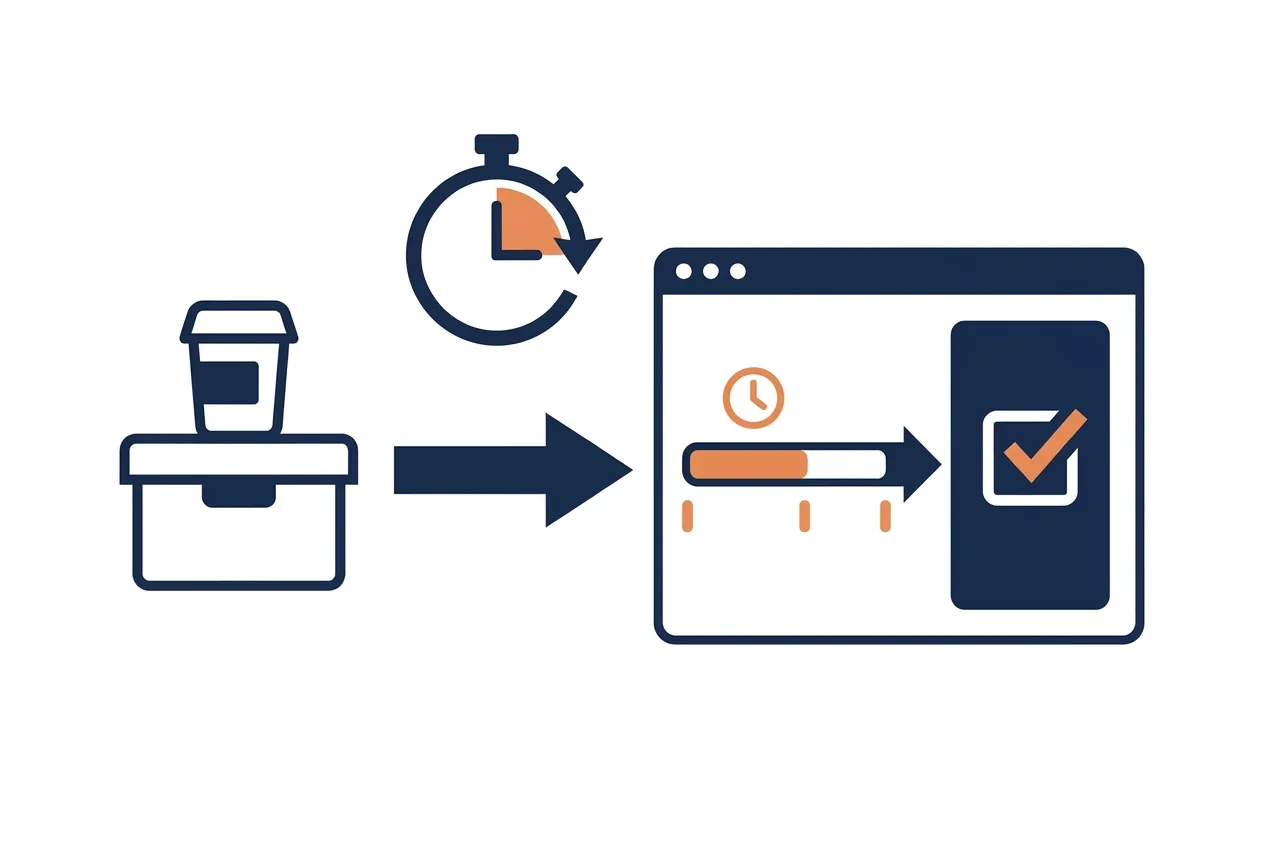
A rapid urine drug test gives you a result at your door. Laboratory confirmation gives you a second result, from the same specimen, a few days later. With Testr you can add that second result after seeing the rapid read, but only within 2 hours of collection. This is what a confirmation drug test is, why the window is 2 hours, and when to book confirmation from the start.
What a confirmation drug test is
A rapid drug test is an immunoassay. Each of the 14 panels on the cassette is a strip that reacts to a class of compounds when the specimen is at or above that panel's screening cutoff. The collector reads each panel as negative or presumptive positive and records it exactly as read.
A confirmation drug test is a different method applied to the same specimen. The sealed specimen goes under chain of custody to a CAP-accredited laboratory, which tests it by LC-MS/MS (liquid chromatography with tandem mass spectrometry). Instead of reacting to a class, LC-MS/MS identifies the specific compound and reports a measured level for it. The laboratory's confirmation menu covers 81 substances, including many that no rapid panel screens for. Results come back in about 72 hours.
Why a rapid result is called presumptive
A rapid strip recognises a family of compounds, not one exact molecule, and some medications and foods are known to react with certain panels. On the amphetamines panel, a valid ADHD prescription can produce a positive. On the opiates panel, a codeine prescription or even poppy seeds can. The panel-by-panel notes are on the 14-panel drug test page, and the short codes printed on the cassette are decoded on the abbreviations page.
A presumptive positive is a reason to confirm, not a conclusion. Confirmation names the compound and gives a number, which is what lets a reviewing professional compare a result against a prescription.
Chain of custody starts at collection
Every Testr visit is documented the same way, whichever test you order. The collector enters the 4-digit PIN from your app before the collection can begin, the specimen is temperature-checked in your presence, a tamper-evident seal is applied and photographed, both parties sign, and one custody code ties the specimen to the record and to any laboratory result.
That record begins at the collection event and cannot be started later. The laboratory relies on it to know that the specimen it receives is the one sealed at your door.
The 2-hour window
If you booked the At-Home Rapid Test and want the laboratory behind it, you can upgrade in the app within 2 hours of collection. The upgrade is made by the account holder in the Testr app, and you pay in the app. The collector does not arrange it at the door, and it does not depend on the collector still being there. You can see the rapid read first and still choose confirmation, as long as you do so inside the window.
The 2 hours is not a scheduling rule. It is the period during which the sealed specimen is still viable for confirmation, so that the specimen the laboratory tests is the same one that was read at your door. After 2 hours the process can no longer guarantee that, and the option closes for that specimen.
If you already know you want the laboratory result, the simpler path is to book the Rapid Test with Laboratory Confirmation from the start on the booking page. Nothing about the visit changes: the same collector, the same 14-panel read, the same record.
When to book confirmation from the start
Booking confirmation up front makes sense when:
A decision hangs on the answer. A rapid read gives a class and a yes-or-no. A laboratory result names the compound and gives a measured level.
The person tested takes a medication that can react with a panel. A valid prescription for buprenorphine, methadone, a benzodiazepine, oxycodone or an ADHD stimulant can produce a positive on the rapid screen. Confirmation reports a measured level, which a reviewing professional can compare against the prescription.
You want coverage beyond the 14 panels. Kratom alkaloids, psilocin, ketamine, gabapentin, tramadol and xylazine are on the laboratory's 81-substance confirmation menu but not on the rapid cassette. See the kratom and 7-OH page for one example.
You are booking for someone else. A parent or professional who books for a family member or client may not be watching the clock after the visit. Choosing confirmation at booking removes the timing question. See the parents page and the professionals page.
If none of these apply and you would rather see the rapid read first, the window exists so that you can.
After the window closes
Once 2 hours have passed without an upgrade, the rapid result stands as what it is: a 14-panel screening read, recorded exactly as the collector saw it, released only to your account, with a PDF on request. It is a documented result, just not a laboratory-confirmed one.
If a laboratory result is still needed, the only route is a new collection: a new visit, a new specimen, a new custody code. Any confirmed result from that visit reflects that later time; it does not confirm the original specimen. A collector can be at your door in as little as 3 hours, 7 AM to 7 PM, seven days a week.
For what each result type means on the report, see how to read a Testr drug test result.
Questions people ask
Can I add laboratory confirmation after the visit?
Yes, in the app, within 2 hours of collection. After that the specimen is no longer viable for confirmation and a new collection would be needed.
Does the collector have to be there for the upgrade?
No. The upgrade is made by the account holder in the Testr app. The specimen was sealed under chain of custody at the visit, and the 2-hour window runs from collection, not from when the collector leaves.
Why 2 hours?
That is the period during which the sealed specimen remains viable for confirmation, so the laboratory tests the same specimen that was read at your door.
How long does the laboratory take?
About 72 hours from collection. The laboratory result appears alongside the rapid read in your account, tied to the same custody code.
Is the rapid result useless if I do not upgrade?
No. It is a documented 14-panel screening read; it gives a class and a yes-or-no rather than a compound and a level.